Veterinary medicine has been part of Dr. Bence Lengyel’s life since childhood.
After gaining early experience at his father’s veterinary practice, he ultimately committed himself to orthopedic surgery, traumatology, and neurology during his university years.
Since 2017, he has been working at Fuziovet Animal Hospital in Budapest (formerly Felicavet), where for the past six years he has focused exclusively on specialized orthopedic and surgical cases.
Since 2023, he has also been a full member of the Hungarian Small Animal Orthopedic Association (MKOE).
In this interview, we talk to him about his experience, challenging surgical cases, and the future of innovation in veterinary medicine.
In general, how do you approach the introduction of new technologies and innovative solutions into your practice?
Dr. Bence Lengyel:
Innovation and technology should be fundamental pillars of every advanced veterinary practice.
Scientific progress around the world is continuous and accelerating exponentially.
Medicine has a responsibility to keep pace with this development and introduce new technologies and procedures – this is in the shared interest of both veterinary professionals and patients.
For me, the first consideration is usability. What matters most is how a particular procedure will help my patient: whether it can provide more or better help than the existing approach, and whether sufficient data is available to assess these factors properly.
What was the point when you decided to use LimesVet’s services, and what do you consider the greatest advantage of working together?
Dr. Bence Lengyel:
For me, the greatest advantage of LimesVet is foresight.
Whenever we are faced with a condition that needs to be treated – whether it is patellar luxation, a disease affecting the forearm or elbow joint, a spinal surgery case, or oncologic surgery – the process always begins with a thorough assessment.
At this stage, we evaluate the patient’s anatomy and the nature and extent of the condition with millimeter-level accuracy.
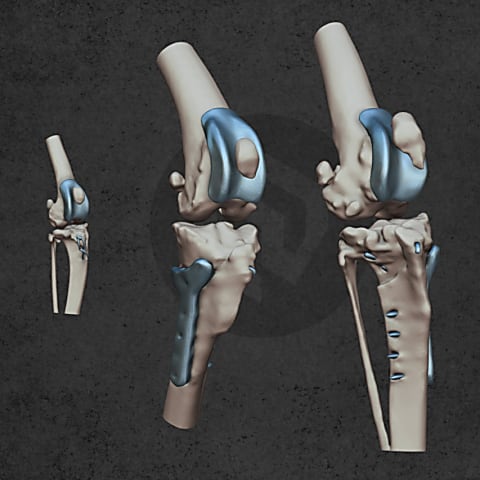
This is followed by a planning phase in which the solution can be tailored specifically to the individual patient, precisely adapting it to their unique anatomy, tissue environment, and the exact anatomical relationships of the affected body part.
As a result, once we are at the operating table, we already know exactly what we are going to do, what steps will follow, what the anatomy of that particular patient looks like, and which structures need to be taken into consideration.
This is often not as straightforward as it may sound, because there are countless variables during surgery.
If we are placing an implant, I can be confident that it will fit immediately on the first attempt and will function exactly where and how we expect it to.
For me, this provides a sense of security while increasing accuracy and precision by an order of magnitude.
How have pre-planned implants or surgical guides affected the course of surgery? Have procedures become easier and faster?
Dr. Bence Lengyel:
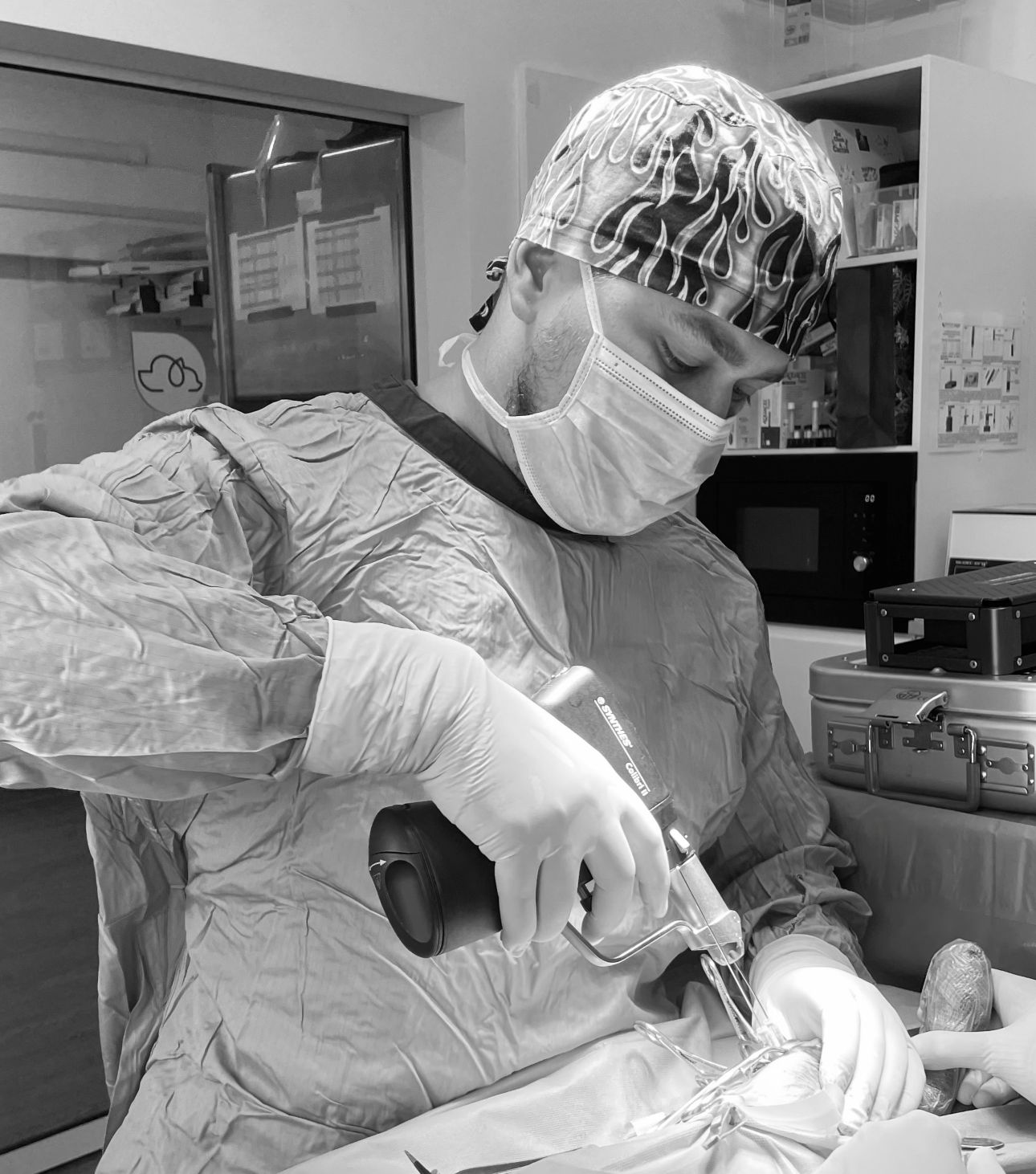
Yes. Both have made procedures significantly easier, faster, and more precise.
When using plates, for example, adaptation can be performed in advance on the printed anatomical model, so there is no need to deal with it during surgery.
Was there a case where a LimesVet solution helped avoid a complication or resulted in particularly rapid recovery?
Dr. Bence Lengyel:
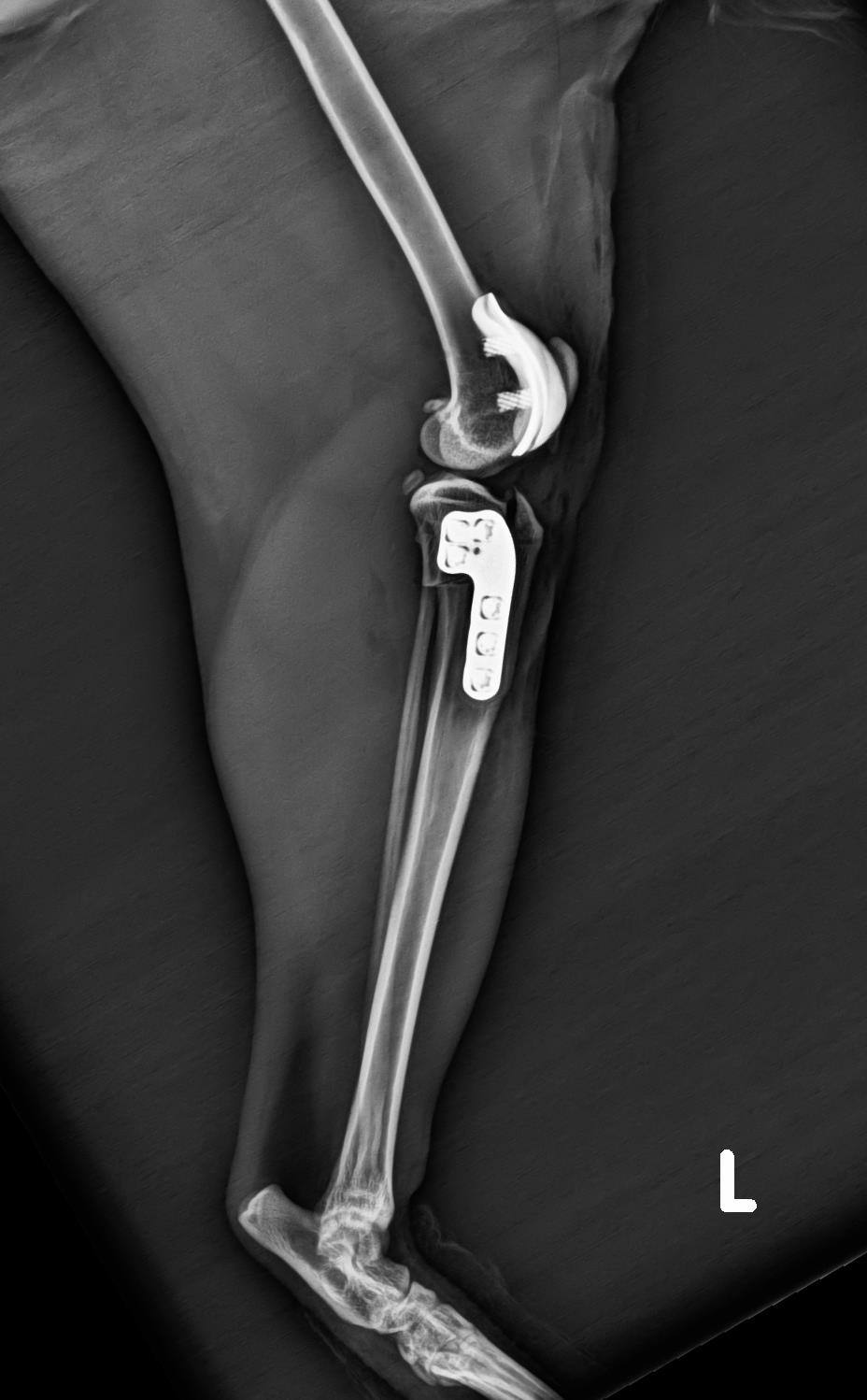
I can mention a specifically orthopedic case involving a middle-aged French Bulldog with chronic patellar luxation.
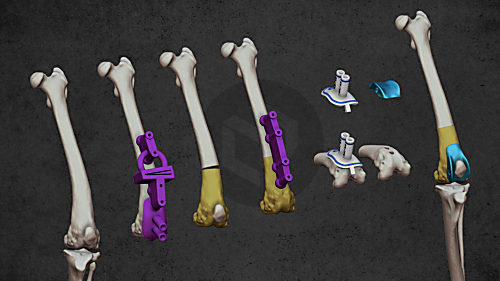
The CT scan revealed that correcting the knee joint locally would not be sufficient, as the deformity of the femur was also significantly contributing to the limb’s malalignment.
The solution ultimately involved corrective osteotomy of the femur, implantation of a trochlear groove prosthesis, as well as soft-tissue corrections.
Without meticulous planning, a comprehensive approach considering the entire limb, and an implant tailored to the patient’s individual anatomy – and had we relied solely on standard treatment of the knee joint – I believe the problem would not have been resolved.
The patellar luxation would have recurred, and the patient would likely have undergone repeated surgeries with, at best, only partial success.
Instead, with a single surgery and approximately two months of rehabilitation, the dog has now been living a full and pain-free life for years.
That is a very significant difference.
How do pet owners react when you explain the customized solution to them?
Dr. Bence Lengyel:
The response is generally very positive. When I present an already planned model, I often see that owners are impressed.
They find it reassuring that we use a customized solution and implant specifically designed for their pet and that every detail has been planned in advance.
This provides a sense of security for both the surgeon and the owner.
This is particularly evident in cases involving patellar luxation and forearm corrections when both limbs are affected. After the success of the first surgery, owners often return enthusiastically – sometimes sooner than they should – asking us to operate on the other side as well, because their dog or cat’s condition has improved and rehabilitation has gone smoothly.
What further technological solutions or developments do you expect to see in the field of veterinary surgery?
Dr. Bence Lengyel:
Perhaps the most exciting aspect of all this is that it can open up entirely new possibilities in areas where there has been no real breakthrough or truly effective solution for a long time.
I would mention techniques for replacing articular surfaces and elbow joint prostheses as examples.
I also expect pioneering developments in complete or partial limb replacement using endoprostheses and exoprostheses.
This is an area that I am personally particularly interested in, and I try to contribute to its development with ideas, observations, and practical experience.
What would you say to veterinarians who have not yet taken the step of using custom implants and surgical guides?
Dr. Bence Lengyel:
To those who do not work in this particular specialty, I would say: believe me, in many cases we can find a better solution than the techniques used so far.
Of course, this does not mean that every patient will necessarily require a custom 3D-printed implant from now on.
However, in cases such as severe patellar luxation or forearm deformity, this option should definitely be considered.
It is even more strongly recommended in challenging or problematic cases because it opens up so many new possibilities.
To colleagues with surgical experience who work in this specialty, I would say that these solutions open new doors and are highly user-friendly.
Custom implants are easy to place, they always fit, and the surgical procedures are easy to learn.
Surgical guides, meanwhile, increase precision by an order of magnitude and provide an added sense of security.
The Secret to Successful and Efficient Surgery Lies in Precise Planning
Dr. Bence Lengyel’s experience clearly demonstrates that 3D surgical planning and custom implants are not a distant promise of the future, but effective tools in small animal orthopedics today.
The precision and predictability offered by personalized planning provide greater confidence for both veterinarians and pet owners – ultimately helping patients achieve faster, pain-free recovery.
Are you ready to join the innovative veterinarians who perform procedures with shorter operating times and greater precision?
Contact us, and let’s design the ideal, personalized solution for your patient!